
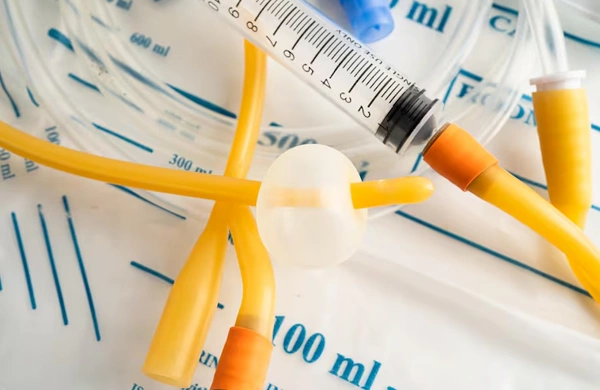
Suprapubic catheterisation is a medical procedure in which a catheter (thin flexible tube) is inserted into the bladder through a small opening in the lower abdomen to drain urine. This method is usually recommended when a catheter cannot be inserted through the urethra or when long-term bladder drainage is required. Suprapubic catheterisation helps patients empty the bladder safely and prevents complications related to urinary retention. Many patients seek Suprapubic Catheterisation treatment in Mumbai under the care of Dr. Shashank Sharma, an experienced urologist specializing in advanced urological procedures and bladder care.
Suprapubic catheterisation is a procedure used to drain urine directly from the bladder through a small incision in the lower abdomen, just above the pubic bone.
A soft catheter is inserted into the bladder and connected to a drainage bag that collects urine. This method is often used when the urethra is blocked, injured, or unsuitable for catheter placement.
Suprapubic catheters can be used temporarily or for long-term bladder management, depending on the patient’s condition.
Suprapubic catheterisation is recommended when normal urine drainage through the urethra is not possible or not advisable.
Urinary Retention:
When the bladder cannot empty properly due to blockage or nerve problems.
Urethral Injury or Damage:
Trauma or surgery affecting the urethra may require an alternative drainage method.
Urethral Stricture:
Severe narrowing of the urethra prevents catheter insertion.
Long-Term Bladder Management:
Patients with neurological conditions may require continuous bladder drainage.
Post-Surgical Care:
After certain urological surgeries, a suprapubic catheter may be used temporarily.
Chronic Urinary Problems:
Some conditions affecting bladder control require long-term catheter use.
Suprapubic catheterisation is an important procedure for safely managing urinary drainage when other methods are not suitable.
Provides Reliable Urine Drainage:
Ensures the bladder empties properly.
Prevents Bladder Overdistension:
Reduces pressure and discomfort caused by urine retention.
Improves Patient Comfort:
Often more comfortable than long-term urethral catheterization.
Reduces Urethral Damage:
Avoids irritation or injury to the urethra.
Helps Prevent Urinary Complications:
Reduces the risk of infections and bladder damage.
Supports Long-Term Bladder Care:
Useful for patients needing continuous bladder drainage.
The approach to Suprapubic Catheterisation treatment in Mumbai depends on the patient’s condition and the need for bladder drainage. Dr. Shashank Sharma performs this procedure using safe and precise techniques.
Before placing a suprapubic catheter, doctors perform a detailed evaluation to understand the patient’s urinary condition.
Diagnostic tests may include:
Ultrasound to assess bladder condition
Urine tests to detect infection
Blood tests to evaluate overall health
Physical examination of the urinary system
The procedure is usually performed under local anesthesia.
During the procedure:
The lower abdomen is cleaned and sterilized.
A small incision is made just above the pubic bone.
A catheter is inserted directly into the bladder through the incision.
The catheter is secured in place with a balloon or fixation device.
The catheter is connected to a urine drainage bag.
The procedure typically takes 15 to 30 minutes.
Recovery after suprapubic catheterisation is generally quick.
Patients are usually advised to:
Keep the catheter area clean and dry
Empty the drainage bag regularly
Drink plenty of fluids to maintain urine flow
Follow instructions for catheter care and replacement
Attend regular follow-up visits with the doctor
The catheter may be changed periodically depending on the type used and the patient’s condition.
Suprapubic catheterisation offers several advantages compared to long-term urethral catheter use.
More Comfortable for Long-Term Use:
Reduces irritation in the urethra.
Lower Risk of Urethral Injury:
Avoids damage caused by repeated catheterization.
Improves Patient Mobility:
Allows greater comfort in daily activities.
Easier Catheter Management:
Simplifies cleaning and maintenance.
Reduced Risk of Certain Infections:
May lower the risk of urethral infections.
Effective Bladder Drainage:
Ensures consistent and reliable urine flow.
Experienced Urologist:
Dr. Shashank Sharma has extensive experience in managing complex urinary conditions.
Expert in Bladder and Urological Procedures:
Specializes in advanced catheterization techniques and bladder care.
Patient-Focused Treatment:
Provides personalized care based on each patient’s medical needs.
Advanced Medical Facilities:
Uses modern techniques to ensure safe and effective procedures.
Comprehensive Post-Procedure Care:
Ensures proper follow-up and long-term bladder health.
Trusted Urology Specialist:
Known for delivering safe and reliable treatment outcomes.
The procedure is usually performed under local anesthesia, so discomfort is minimal.
A suprapubic catheter can remain in place for weeks or even months, depending on the patient’s condition.
Yes, most patients can continue normal daily activities with proper catheter care.
Typically, the catheter is replaced every 4–6 weeks, depending on the type used and medical advice.
Possible risks include infection or catheter blockage, but proper care and regular follow-up help minimize these risks.



Comments
Be the first to review