
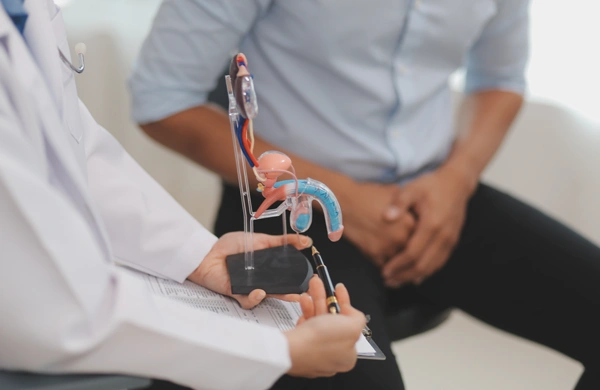
Urethroplasty is a surgical procedure performed to repair or reconstruct the urethra, the tube that carries urine from the bladder out of the body. This procedure is commonly used to treat urethral strictures, a condition where the urethra becomes narrowed due to scar tissue, injury, infection, or previous medical procedures. Urethroplasty helps restore normal urine flow and prevents complications related to urinary obstruction. Many patients seek Urethroplasty treatment in Mumbai under the expertise of Dr. Shashank Sharma, an experienced urologist specializing in advanced reconstructive urological surgeries.
Urethroplasty is a reconstructive surgical procedure used to treat narrowing or blockage of the urethra. The urethra can become narrowed due to scar tissue, which restricts the flow of urine and causes difficulty in urination.
During urethroplasty, the surgeon removes the scarred or narrowed section of the urethra and reconstructs the healthy urethra. In some cases, tissue from another part of the body (commonly the inner cheek) may be used to rebuild the urethra.
This procedure is considered the most effective long-term treatment for urethral strictures.
Urethroplasty is recommended when urethral narrowing significantly affects urine flow or when other treatments fail.
Urethral Stricture:
Scar tissue narrows the urethra and blocks normal urine flow.
Previous Injury or Trauma:
Pelvic injuries can damage the urethra.
Repeated Infections:
Chronic urinary infections may lead to urethral scarring.
Complications From Catheterization:
Long-term catheter use may cause urethral narrowing.
Previous Failed Treatments:
Patients who do not respond to dilation or endoscopic procedures may require urethroplasty.
Congenital Abnormalities:
Some individuals are born with urethral structural issues.
Urethroplasty is important for restoring normal urinary function and preventing long-term complications.
Restores Normal Urine Flow:
Removes blockage and allows urine to pass normally.
Provides Long-Term Relief:
Offers a permanent solution for urethral strictures in many cases.
Improves Quality of Life:
Reduces urinary discomfort and complications.
Prevents Urinary Retention:
Helps avoid severe blockage that can affect bladder function.
Reduces Risk of Infections:
Improves urinary flow and reduces infection risk.
Protects Bladder and Kidney Health:
Prevents pressure buildup in the urinary tract.
The approach to Urethroplasty treatment in Mumbai depends on the location and severity of the urethral stricture. Dr. Shashank Sharma performs advanced reconstructive procedures to restore normal urinary function.
Before recommending urethroplasty, doctors perform a detailed evaluation to determine the location and length of the urethral narrowing.
Diagnostic tests may include:
Uroflowmetry to measure urine flow rate
Retrograde urethrogram (X-ray imaging of the urethra)
Cystoscopy to view the urethra internally
Ultrasound imaging of the urinary tract
Urine tests to check for infection
Urethroplasty is usually performed under general or spinal anesthesia.
The procedure may involve different techniques depending on the condition:
Excision and Primary Anastomosis:
The narrowed portion of the urethra is removed, and the healthy ends are reconnected.
Graft Urethroplasty:
Tissue from the inside of the cheek (buccal mucosa) or another area is used to reconstruct the urethra.
Augmented Urethroplasty:
Additional tissue is used to widen the narrowed urethra.
During the surgery:
The surgeon identifies the narrowed portion of the urethra.
The scarred tissue is carefully removed or repaired.
The urethra is reconstructed using healthy tissue.
A catheter is placed temporarily to allow proper healing.
The surgery usually takes 2 to 3 hours, depending on the complexity of the case.
Recovery after urethroplasty typically requires careful monitoring to ensure proper healing.
Patients may stay in the hospital for 1–3 days after the procedure.
After surgery, patients are usually advised to:
Keep the urinary catheter in place for 2–3 weeks as recommended
Avoid strenuous activities during the healing period
Drink plenty of fluids to maintain urinary flow
Take prescribed medications to prevent infection
Attend follow-up visits to monitor recovery
Most patients can resume normal daily activities within 3–4 weeks.
Urethroplasty offers several benefits for patients suffering from urethral strictures.
Permanent Solution for Urethral Strictures:
Provides long-term relief compared to temporary treatments.
Improves Urinary Flow:
Restores normal urine passage.
Reduces Recurrence Risk:
Lower recurrence rates compared to dilation or endoscopic treatments.
Prevents Urinary Complications:
Protects bladder and kidney health.
Improves Quality of Life:
Eliminates discomfort and urinary difficulties.
Highly Successful Procedure:
Offers excellent success rates when performed by experienced surgeons.
Experienced Urologist:
Dr. Shashank Sharma has extensive experience in performing complex reconstructive urological surgeries.
in Urethral Reconstruction:
Expert in urethroplasty and advanced stricture management techniques.
Advanced Surgical Techniques:
Uses modern reconstructive methods to ensure effective outcomes.
Patient-Focused Treatment:
Each treatment plan is personalized according to the patient’s condition.
High Success Rates:
Known for delivering reliable and long-term results.
Comprehensive Post-Surgery Care:
Ensures proper recovery and long-term urinary health.
Yes, urethroplasty is considered the most effective long-term treatment for urethral strictures.
The procedure usually takes 2 to 3 hours, depending on the complexity of the stricture.
Yes, a temporary catheter is usually placed for a few weeks to allow the urethra to heal properly.
Most patients recover within 3–4 weeks, although complete healing may take longer.
Like any surgery, risks may include infection or bleeding, but complications are uncommon when performed by an experienced surgeon.



Comments
Be the first to review