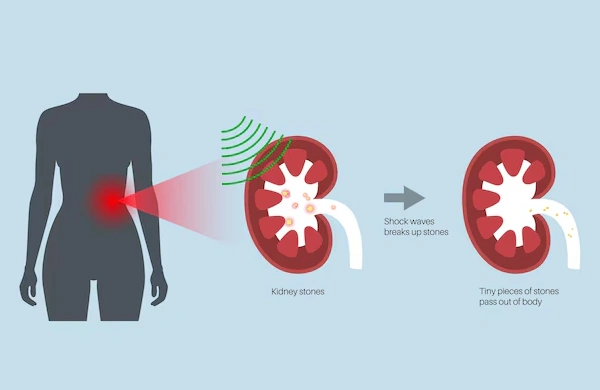
Lithotripsy is a modern, minimally invasive medical procedure used to break kidney stones into smaller fragments so they can pass easily through the urinary tract. Kidney stones can cause severe pain, urinary problems, and infections if left untreated. Lithotripsy offers an effective and safe solution for removing stones without the need for major surgery. For advanced and reliable care, many patients seek Lithotripsy treatment in Mumbai under the supervision of Dr. Shashank Sharma, an experienced Consultant Urologist specializing in modern stone management and minimally invasive urological procedures.
Lithotripsy is a medical procedure that uses high-energy shock waves or laser energy to break kidney stones into tiny fragments. These fragments can then pass naturally through urine or be removed using minimally invasive techniques.
The procedure is widely used for treating stones located in the kidneys, ureters, or urinary tract. Lithotripsy is considered one of the most effective treatment options for patients with stones that are too large to pass naturally but do not require open surgery.
Depending on the type and location of the stone, different lithotripsy techniques may be used to achieve the best treatment outcome.
Lithotripsy is recommended when kidney stones cause symptoms or cannot pass on their own. Some common reasons include:
Large Kidney Stones:
Stones that are too large to pass naturally through urine may require lithotripsy.
Severe Pain:
Kidney stones often cause intense pain in the back, side, or lower abdomen.
Urinary Blockage:
Stones can block the ureter, preventing urine from flowing normally.
Repeated Infections:
Kidney stones may increase the risk of urinary tract infections.
Blood in Urine:
Stones can irritate the urinary tract and cause bleeding.
Risk of Kidney Damage:
Untreated stones may lead to pressure and long-term kidney damage.
Early treatment with lithotripsy helps relieve symptoms and prevents serious complications.
Timely lithotripsy treatment is important for protecting kidney health and improving patient comfort.
Relieves Severe Pain:
Breaking stones into smaller fragments helps eliminate the source of intense pain.
Restores Normal Urine Flow:
Lithotripsy removes blockages in the urinary tract.
Prevents Kidney Damage:
Early treatment reduces pressure on the kidneys and protects kidney function.
Avoids Major Surgery:
Lithotripsy is a minimally invasive procedure that does not require large incisions.
Reduces Risk of Infection:
Removing stones lowers the chances of urinary tract infections.
Improves Quality of Life:
Patients experience significant relief from symptoms and can return to normal activities quickly.
The approach to Lithotripsy treatment in Mumbai depends on the size, type, and location of the kidney stone. Dr. Shashank Sharma uses advanced technology and minimally invasive techniques to ensure effective stone removal.
Before the procedure, a detailed evaluation is performed to determine the exact size and location of the stone. Diagnostic tests may include:
Ultrasound of the kidneys and urinary tract
CT scan for precise stone detection
X-rays to evaluate stone position
Blood and urine tests to assess kidney function and infection
Different lithotripsy techniques may be used depending on the patient’s condition.
Extracorporeal Shock Wave Lithotripsy (ESWL):
This is the most common type of lithotripsy. Shock waves are generated outside the body and directed toward the kidney stone to break it into small pieces.
Laser Lithotripsy:
A thin scope is inserted through the urinary tract to reach the stone, and laser energy is used to break it into fragments.
Ultrasonic Lithotripsy:
High-frequency sound waves are used to break larger stones during certain endoscopic procedures.
The lithotripsy procedure is usually performed under anesthesia or sedation to ensure patient comfort.
The patient is positioned on a specialized table or imaging system.
Imaging guidance helps locate the stone accurately.
Shock waves or laser energy are directed at the stone to break it into smaller fragments.
The fragments either pass naturally through urine or are removed using endoscopic instruments.
The procedure usually takes 30 to 60 minutes, depending on the stone size and complexity.
Recovery after lithotripsy is generally quick, and most patients can return home the same day.
Patients may experience mild symptoms such as slight discomfort, blood in urine, or frequent urination for a few days as stone fragments pass through the urinary tract.
Doctors typically recommend:
Drinking plenty of water to flush out stone fragments
Taking prescribed medications to manage pain or prevent infection
Avoiding strenuous activities for a few days
Attending follow-up visits to ensure complete stone clearance
Most patients recover fully within a few days to one week.
Lithotripsy provides several advantages compared to traditional surgical treatments.
Minimally Invasive:
The procedure does not require large incisions, resulting in less pain and quicker recovery.
High Success Rate:
Lithotripsy effectively breaks stones into small pieces that can pass naturally.
Short Hospital Stay:
Most procedures are performed on an outpatient basis.
Quick Recovery:
Patients can usually return to daily activities within a few days.
Lower Risk of Complications:
Modern technology ensures safer treatment with minimal side effects.
Improved Kidney Health:
Removing stones prevents further complications and protects kidney function.
Extensive Experience:
Dr. Shashank Sharma has over 12 years of experience in advanced urological procedures and kidney stone management.
Expertise in Modern Stone Treatments:
Highly skilled in procedures such as ESWL, laser lithotripsy, RIRS, and ureteroscopy.
Advanced Medical Technology:
Treatment is performed using state-of-the-art equipment for precise and effective stone removal.
Personalized Treatment Plans:
Each patient receives a tailored treatment plan based on stone size, location, and medical history.
Minimally Invasive Approach:
Focus on procedures that ensure faster recovery and minimal discomfort.
Comprehensive Follow-up Care:
Regular monitoring helps prevent recurrence and ensures complete recovery.
Lithotripsy is usually performed under sedation or anesthesia, so patients do not feel pain during the procedure. Mild discomfort may occur afterward but is manageable with medications.
The procedure typically takes 30 to 60 minutes, depending on the size and number of kidney stones.
Most patients can return to normal activities within a few days to one week, although complete passage of stone fragments may take longer.
Common temporary side effects include mild pain, blood in urine, and frequent urination as stone fragments pass through the urinary tract.
Yes, kidney stones can recur if preventive measures are not followed. Proper hydration, dietary changes, and regular medical check-ups can help reduce the risk of recurrence.


Comments
Be the first to review